
1/1
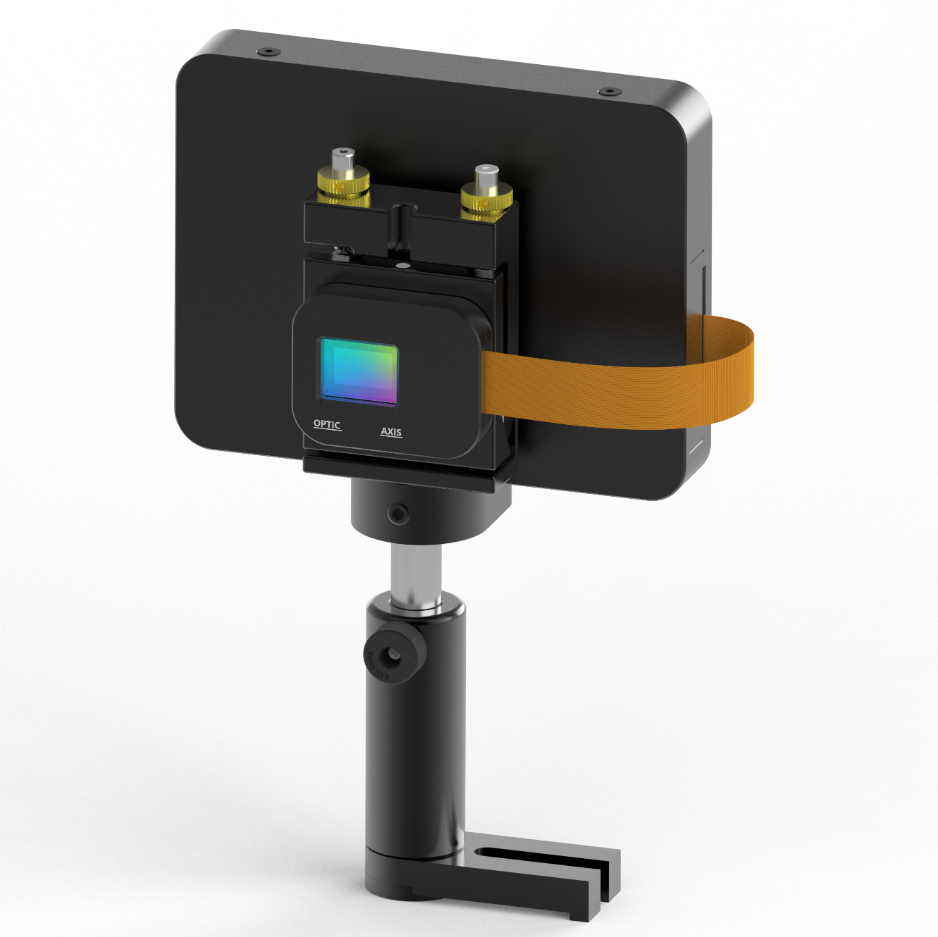

SLM-Spec-PAE380
SLM-Spec-PAE380
Liquid Crystal Spatial Light Modulator-P series
1/1


Liquid Crystal Spatial Light Modulator-P series
Product Description
Functional Positioning and Target Users for Advanced Optical Wavefront Control
The SLM-Spec-PAE380 is engineered for optical scientists, researchers, and system integrators requiring precise beam shaping and phase modulation capabilities. As a reflective lcos spatial light modulator, it enables controlled modulation of both amplitude and phase in complex optical setups. This device suits applications in academic research, prototype development, and optical instrumentation where rigorous wavefront manipulation and digital addressing are critical. Offered by an experienced spatial light modulator manufacturer, it meets the demands for stable, high-resolution spatial modulation supporting experimental, educational, and iterative testing objectives.
Technical Features and Precise Performance Metrics
This slm spatial light modulator integrates twisted nematic liquid crystal technology on a high-resolution 1920×1200 reflective LCOS panel, enabling phase modulation from 2π to 6π. It delivers an 8-bit grayscale depth (256 levels) at 60 Hz, ensuring smooth and detailed optical wavefront adjustments. The HDMI interface facilitates seamless integration into digital control systems. The device supports a broad wavelength range (400–760 nm) with a contrast ratio exceeding 1000:1 and a pixel pitch of 8.0 µm. Its compact design incorporates efficient thermal management, operating between +10°C to +40°C, targeting robust performance in demanding lab and prototype environments.
Industrial Applications and Integration Value in Optical Research and Prototyping
Utilized in beam shaping experiments, phase correction, and holographic display prototypes, this spatial light modulator from a specialized spatial light modulator supplier enhances precision optics workflows across photonics, laser processing, and biomedical research. Its reliable modulation capabilities support optical bench alignment, wavefront sensing, and digital holography integration, facilitating complex optical experimentation and iterative prototype validation. By delivering consistent phase and amplitude control within compact modules, the SLM-Spec-PAE380 provides a scalable solution for experimental validation and system integration in advanced optical research and production testbeds.
Optimized Modular Design and System Compatibility
The SLM-Spec-PAE380 incorporates a reflective LCOS panel with a compact form factor, designed to minimize optical path disruptions and allow straightforward integration into existing optical benches. Its HDMI digital control interface supports standard hardware protocols, enabling compatibility with diverse control electronics. Modular design considerations by this proven spatial light modulator manufacturer ensure adaptability in complex optical setups requiring precise alignment and interchangeability. This design approach facilitates integration flexibility and system scalability, critical for engineered solutions in research labs and prototype environments utilizing slm spatial light modulators.
Superior Modulation Performance and Operational Reliability
This lcos spatial light modulator delivers high contrast ratio and a broad phase modulation range ensuring advanced beam shaping and wavefront correction precision. The 8-bit grayscale enables smooth gradient control, critical for detailed optical manipulations. The device’s stable operation at 60 Hz frame rate supports dynamic modulation tasks without sacrificing performance. High pixel fill rate and low power consumption further enhance system reliability and reduce heat-related drift in prolonged use. Users gain a robust, user-friendly solution for intricate optical experiments and iterative prototyping workflows that demand repeatability and precise modulation fidelity.


Spatial light modulators are based on liquid crystal microdisplay technology (digital
addressing), using Twisted Nematic Liquid Crystalline Materials, and utilizing the
birefringence effect of twisted nematic liquid crystals ,which enables the precision
modulation of the amplitude, phase and power of the incident beam.
This ability of the precision control to the phase of the wavefront makes spatial light
modulators become ideal choice for applications such as beam shaping and phase
correction, educational research, biomedical imaging, and digital holographic experiments.
Configuration


Application in Experimental Beam Shaping and Optical Wavefront Correction
In advanced photonics laboratories, the SLM-Spec-PAE380 plays a pivotal role in sculpting complex beam profiles and correcting phase distortions during optical experiments. Its high-resolution phase and amplitude mapping capabilities enable precise modulation for coherent beam control beneficial in laser research, microscopy, and adaptive optics. The device’s broad wavelength compatibility and stable 8-bit grayscale operation ensure compliance with various laser sources and detector systems. Integration with standard optical benches and digital controllers simplifies experimental setups, improving workflow efficiency and enabling accurate real-time wavefront adjustments critical to research outcomes.
Role in Holographic Display Development and Optical Prototype Validation
Within holographic display research and prototype development environments, this spatial light modulator supplier’s product supports encoding complex holographic patterns required for real-time 3D imaging and visualization. The SLM-Spec-PAE380’s reflective LCOS technology delivers precise phase modulation necessary for reconstructing accurate holograms, making it indispensable for digital holography experiments and optical display validation. Its seamless interoperability with digital signal processors and optics rigs accelerates development cycles, optimizing iterative testing. The device also facilitates system calibration and benchmarking, ensuring holographic systems meet stringent optical performance criteria demanded by research institutes and advanced product developers.
What applications are suitable for your SLM spatial light modulator?
Our spatial light modulator SLM-Spec-PAE380 is ideal for optical research, beam shaping, phase correction, and prototype development. It supports precise wavefront control using reflective LCOS technology, making it suitable for labs, educational demos, and holographic display prototypes.
Can you provide customization options for SLM modules?
We offer tailored solutions based on customer requirements. Our expertise as a spatial light modulator manufacturer enables us to adjust specifications like phase modulation range and frame rate. Contact us to discuss custom configurations for your optical setup or system integration.
How is the SLM-Spec-PAE380 installed and controlled?
The device uses a standard HDMI interface for digital control, facilitating straightforward integration into existing optical setups. We provide detailed technical support to ensure smooth installation and configuration for your specific application needs.
What are the environmental and operational limits of the SLM-Spec-PAE380?
Our SLM operates reliably between +10°C and +40°C and can be stored from -20°C to +55°C. It supports a wavelength range of 400–760 nm. These specifications ensure stable performance in typical research and industrial environments.


