
1/1
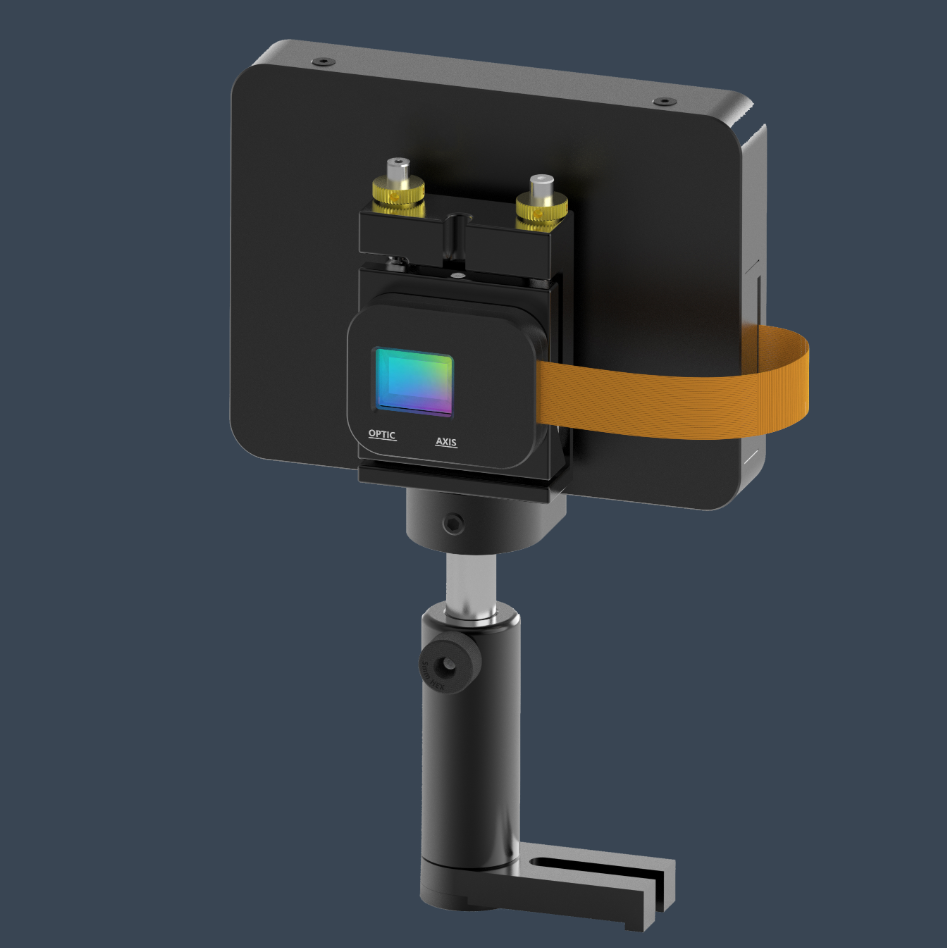

SLM-Spec-PAC380
SLM-Spec-PAC380
Liquid Crystal Spatial Light Modulator-P series
1/1


Liquid Crystal Spatial Light Modulator-P series
Product Description
Functional Target and User Adaptability
The SLM-Spec-PAC380 serves as a versatile solution tailored for researchers, engineers, and developers requiring precise optical modulation. As a product from a reputable spatial light modulator manufacturer and spatial light modulator supplier, it suits laboratory environments, optical communication development, and biomedical imaging setups. Its programmable amplitude and phase control capabilities enable users to conduct wavefront shaping, phase corrections, and beam shaping experiments with high fidelity. With digital addressing at 8-bit depth across 256 levels, it accommodates complex modulation demands ensuring precise light manipulation for advanced scientific and industrial applications.
Technical Features and Measured Specifications
This device integrates advanced reflective lcos spatial light modulator technology leveraging Twisted Nematic liquid crystals for accurate phase modulation up to 2.5π at 1550 nm wavelength. The system supports a full high resolution of 1920×1200 pixels with an 8.0 μm pixel pitch and maintains a 60 Hz frame rate to enable dynamic, real-time beam control. Its dielectric mirror design ensures a high reflection coefficient (>94%) while operating efficiently under low power consumption (≤5W). Equipped with an HDMI interface, this slm spatial light modulator offers straightforward compatibility and easy integration into existing optical systems, maintaining operation from +10℃ to +40℃ for reliability in controlled environments.
Industry Applications and Practical Value
As a precision tool from a trusted spatial light modulator supplier, the SLM-Spec-PAC380 has broad uses in optical communications testing, digital holography, laser beam shaping, and biomedical imaging research. It enables high-quality wavefront modulation for phase-correction testing and complex holographic displays, supporting R&D in photonics, laser processing, and adaptive optics fields. The device’s programmable control enhances experimental repeatability and improves system-level efficiency in applied optical research, providing end users with measurable advantages in performance and customization within research, education, and industrial prototyping environments.
Structural and System Design Advantages
The SLM-Spec-PAC380 exemplifies robust design through its reflective LCOS spatial light modulator architecture, characterized by a dielectric mirror structure that minimizes power consumption and thermal load. Its pixel pitch precision at 8.0 μm coupled with a 1920×1200 resolution ensures enhanced spatial fidelity. The device’s modular form factor with HDMI interface promotes seamless integration into diverse optical systems. As a product from a leading spatial light modulator manufacturer, it supports easy firmware updates and calibration, enabling system-level scalability and adaptability for complex beam shaping applications across laboratory and industrial settings.
Performance and Usability Benefits
Equipped with 8-bit 256-level analog input gradations, this spatial light modulator delivers refined phase and amplitude modulation with minimal latency supported by 60 Hz refresh rates. Operation within a +10℃ to +40℃ range ensures stable performance and reliability, critical for sustained scientific workflows. The user-friendly HDMI interface facilitates straightforward compatibility with control electronics and software, reducing setup complexity typical for slm spatial light modulators. High reflection efficiency and low power consumption enhance both operational cost-effectiveness and system reliability, fostering confidence in repeatable measurement and modulation accuracy for demanding applications.


Spatial light modulators are based on liquid crystal microdisplay technology (digital
addressing), using Twisted Nematic Liquid Crystalline Materials, and utilizing the
birefringence effect of twisted nematic liquid crystals ,which enables the precision
modulation of the amplitude, phase and power of the incident beam.
This ability of the precision control to the phase of the wavefront makes spatial light
modulators become ideal choice for applications such as beam shaping and phase
correction, educational research, biomedical imaging, and digital holographic experiments.
Configuration


Optical Communications Testbed Integration
In advanced optical communications laboratories focused on modulated light experiments, the SLM-Spec-PAC380 functions as an agile beam modulation element. Its reflective LCOS spatial light modulator mechanism enables precise wavefront control and phase modulation crucial for simulating and testing signal propagation and distortion compensation in fiber optic networks. Integrating with programmable controllers via HDMI, this spatial light modulator supports real-time waveform adjustments and phase-correction needed for system prototyping and performance evaluation. Its stable operation at common lab temperatures and low power requirements align with the demands of intensive testing environments requiring high repeatability and conformity to signal processing standards.
Biomedical Imaging Research Deployment
Within biomedical imaging and microscopy research environments, the spatial light modulator supplier provides a solution capable of fine dynamic beam shaping essential for enhanced optical sectioning, adaptive illumination, and phase contrast techniques. The SLM-Spec-PAC380’s 1920×1200 high-resolution and analog 8-bit modulation empower precise light control to optimize imaging contrast and depth resolution. Its dielectric mirror construction and low heat generation contribute to sample integrity during extended observation periods. Integrated into imaging systems with standard HDMI controls, the device enables streamlined synchronization with imaging acquisition hardware, supporting high throughput experimental workflows and advancing precision in biomedical optical diagnostics.
What interface options are available for the SLM-Spec-PAC380?
Our SLM-Spec-PAC380 device supports an HDMI interface, allowing easy connection with standard video sources. This ensures compatibility with many industry-standard systems, making integration into your optical setup straightforward and reliable for your spatial light modulator projects.
Can the SLM-Spec-PAC380 be customized for specific project needs?
We understand varying industrial applications require specific features. While the standard product specs are listed, we invite you to contact us directly to discuss possible spatial light modulator manufacturer customization options and delivery timelines tailored to your operational requirements.
What are the recommended operating and storage conditions for the SLM-Spec-PAC380?
The device operates reliably between +10℃ and +40℃ and should be stored within -20℃ to +55℃. Maintaining these conditions ensures stable phase modulation and display performance, which is critical for precise control in professional applications using the slm spatial light modulator.
How do you support installation and maintenance of your spatial light modulators?
We provide technical assistance during setup to ensure your spatial light modulator supplier experience is smooth from integration to operation. Our engineers can guide you through installation steps and offer ongoing support to maintain optimal function in your lab or industrial environment.


